
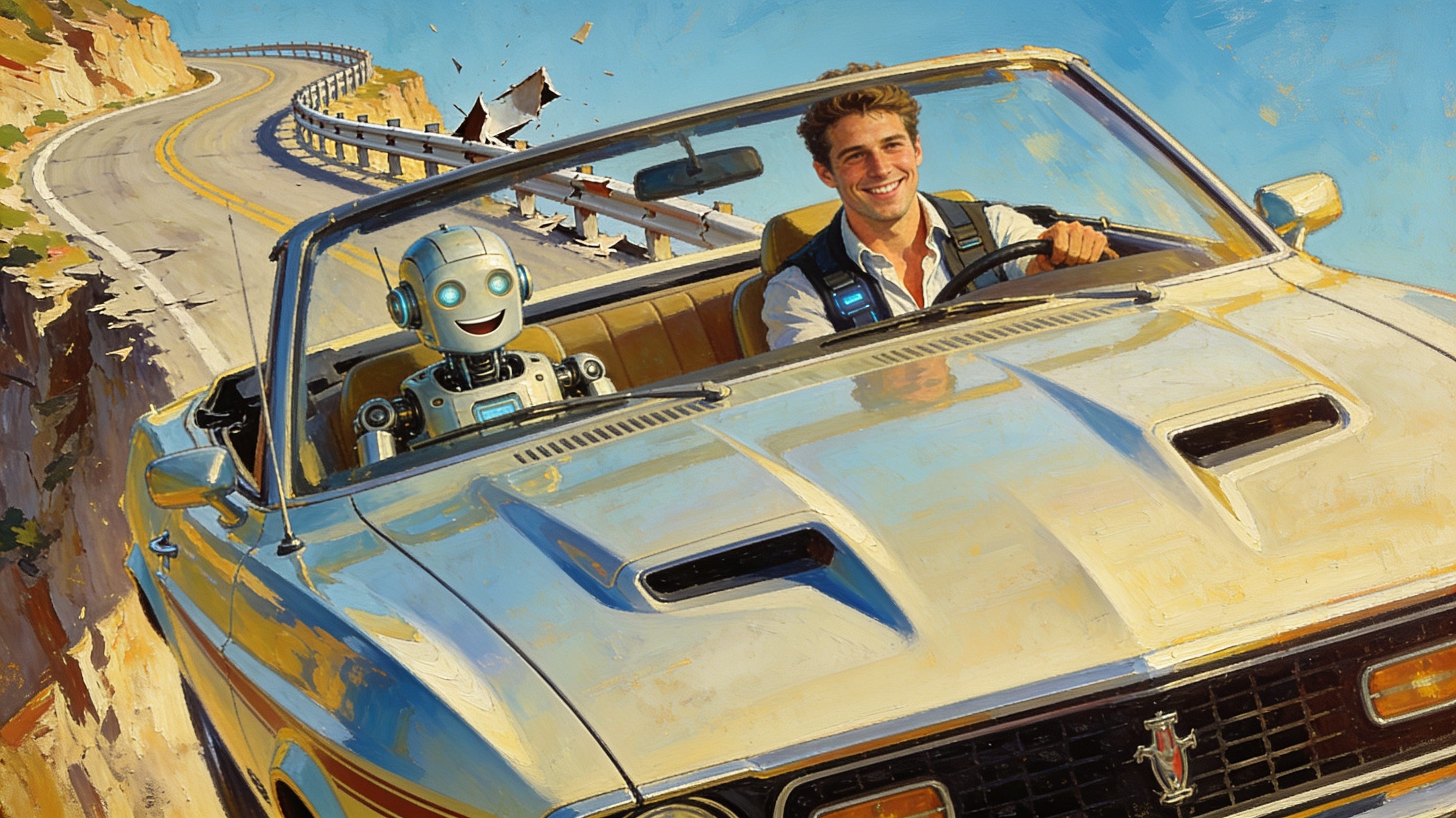
You know the story. One person, one garage, one glowing screen. They wrote every line of code, drew every logo, answered every support ticket, and slept on the floor until, one day, they walked out a billionaire. Alone. It’s the most repeated story in all of startup culture, and it’s the one almost nobody stops to check.
Well, I’m checking it. And it’s garbage.
Here’s what makes this the right moment to say so. The myth just got a new spin. The old version was the lone genius in the garage. The new version, dressed up in the language of 2026, is the solo founder commanding an army of AI agents, one human doing the work of a team of ten, a full-scale company with a headcount of one. “The first billion dollar company with one employee.” I’ve read the essays. They feel alluring. And the seductive part is that they’re half right. AI is real leverage. A founder today genuinely can get further alone than at any point in history. But leverage is not the entire answer. Leverage steers nothing on its own. Enlist a hundred agents in service of an unvalidated idea and all you’ve built is a faster way to drive off the cliff, Thelma and Louise-style, only with a robot in the passenger seat.
The dream team is not you
So let’s use the metaphor I keep coming back to. Baseball.
You could be the best pitcher alive. The best shortstop, too. The best first baseman anyone’s ever seen. Doesn’t matter. You cannot play all nine positions in the same inning, and nobody in the history of the sport has won a World Series with one guy standing on an empty field. The solo founder myth asks us to believe a company is a one-position game. It isn’t. It never was. Building a company is the most nine-positions-at-once thing a person can do.
And here’s the part that should end the argument on its own: the famous “solo” founders were never solo. Not one of them.
Steve Jobs had Wozniak, who actually built the machine. He had Mike Markkula, who wrote the check and the business plan. Later he had Jony Ive and Tim Cook. Bill Gates had Paul Allen, then Steve Ballmer. Pull the thread on any lionized lone genius and a whole team falls out of the sweater, every single time. And Elon Musk, who wears the lone-genius costume better than anyone on the planet, will tell you in the very same breath that his companies do not survive without other people, brilliant, genius people, doing work he could never do himself. The people we hold up as proof that you can do it alone are the loudest witnesses that you can’t.
So why does this story refuse to die? Two engines keep it running, and both are just bad thinking dressed up as wisdom.
The first is that we only ever study the winners. We line up the handful of founders who made it, look for what they had in common, and decide it was going it alone. They didn’t go it alone, of course, but the losers who actually did aren’t around to be counted, because they lost.
The second is the inversion. A few founders looked solo in the press, therefore looking solo must be how you win. That’s exactly as smart as noticing that rich people wear expensive watches and concluding the watch is what made them rich. Put the watch on. See how it goes.
The press loves the lone hero because “brilliant loner defies the world” is a better story than “a good team executed patiently for six years.” PR firms manufacture it because you cannot fit a team onto a magazine cover, but you can fit a face. And founders, let’s be honest with ourselves, lean into it because it flatters us. It makes the whole thing feel like destiny instead of assembly. A myth this useful to everyone repeating it almost never gets checked at the door.
But here is where it stops being a harmless story and starts doing real damage.
The damage is real - and it’s in your head
Tell a founder that the company lives or dies on their solitary genius, and you put the weight of the world on their shoulders. You’ve told them that the whole thing comes down to their personality and skills and fortitude, that they are the one and only thing standing between the idea and success, and that needing help is proof they don’t have what it takes. So they don’t ask. They isolate. They confuse doing everything themselves with doing the job. They conclude that they need funds to hire other people but need to tell them what to do. Worst of all, they mistake motion for progress: they put their head down and build, alone, at three in the morning, burning the one resource they can’t get back, instead of building relationships with the collaborators and advisors and customers and fans who can make or break their efforts.
They burn out.
That’s the real cost. Because the only question that finally matters is product-market fit, and roughly nine out of ten startups die having never reached it. You do not find product-market fit by heroically coding in the dark. You find it in conversation with other people … the exact behavior the solo myth trains founders to skip. The myth doesn’t just flatter. It steers people away from the one thing that will save them.
And this is precisely why the 2026 AI version is the dangerous one, not the liberating one. You can now get a product seventy percent of the way to real, by yourself, faster than ever. Then you hit the wall you can’t see over. Is this built right? Do people want it? Does it need to change based on real feedback? AI got you to that wall at record speed. It cannot tell you what’s on the other side. It’s not your customer. It’s not your collaborator. It has no judgment, no accountability, no stake in your outcome, and it will never look you in the eye and tell you that you’re wrong.
That last part is not a feature. For a founder, a partner who tells you you’re always brilliant is worse than no partner at all.
The answer is people
So let me say what a founder actually is, because the flattering version has it backwards. A founder was never the person who does everything. A founder is the person who sees the thing before anyone else does, holds the conviction when it’s unreasonable to, and then assembles and orchestrates the people, and yes, now the machines, who make it real. That is not a smaller job than the myth promises. It’s the actual job. The lone-genius model isn’t just factually wrong. It’s flattering in the specific way that gets people hurt.
Entrepreneurship is a team sport. That’s not a motivational slogan. It’s a plain description of how the thing works.
So when you’re planning your life as a founder, don’t reach for that seductive myth. Reach for people. Look for collaborators, not heroes. Veterans. Fractionals. People who have done this before and will tell you the truth to your face - and then help you move forward. You don’t have to give away half your company to stop being alone, you don’t have to raise a ton of money before hiring name-brand experts, and the machines won’t save you. You were never, ever supposed to do it by yourself in the first place.
Can we please, finally, kill this idea?
